Ons 12-16
Tors 12-19
Fre 12-16
Lør 12-15
Cecilie Hole, Karina Tene, and Vivian Haver Figenschou
RE:CLAIMED
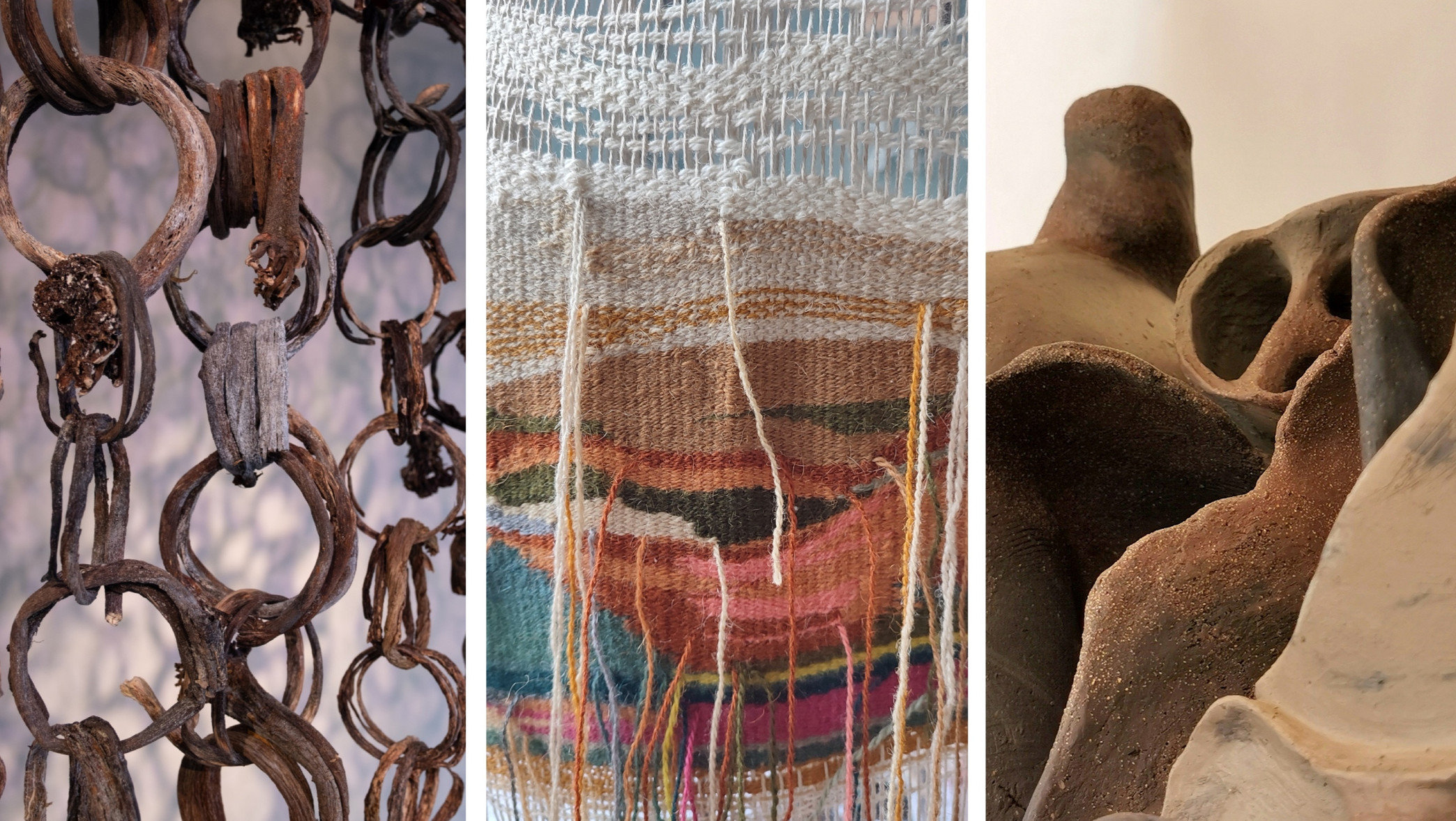
RE:CLAIMED is a group exhibition that will be held from May 16 to May 30, 2026, at the Møre & Romsdal Art Center in Molde. The exhibition brings together the three artists Cecilie Hole, Karina Tene, and Vivian Haver Figenschou for a joint investigation of materiality, landscape, and transformation.
The exhibition takes its cue from the gradual and often imperceptible processes—erosion, putrefaction, migration, and belonging—that shape both landscapes and bodies, both memories and materials. Through installation, sculpture, textile, and performative elements, the three artists explore how nature’s cycles and human activity are inextricably linked, with a particular focus on polar regions, coastal landscapes, and migration experiences.
The title RE:CLAIMED serves as an overall framework, where the aim is to reclaim materials, histories, and narratives, transform them, and carry them forward. The works are based on natural and recycled materials, such as bone, seaweed, wool, clay, and cloth, and allow these materials to serve both as physical structures and as conveyors of knowledge, loss, and caring/grief.
The exhibition investigates the relationship between nature and human impact through three combined perspectives:
Multispecies relations and responseability—coexistence, symbiosis, and crossspecies care, where death, decomposition, and life are understood not as opposites but as continuous transitions.
Movement, migration, and belonging—how landscapes are experienced, appropriated and emotionally transformed by people on the move.
Erosion, decay, and entropy—as both natural processes and consequences of human hubris, especially connected to the historical exploitation of resources, such as whaling.
Cecilie Hole uses materials such as bone, wool, and seaweed to develop sculptural and spatial works that investigate death, symbiosis, and ecological connectivity. Her works sometimes include larger installations such as seaweed tissue, body-like forms, and structures inspired by animals and rituals, as well as smaller objects and potentially also performative elements. The materials have both concrete and metaphorical functions—as remnants, protection, and crossspecies connectors.
Karina Tene unites craft traditions from Norway and Peru by exploring textiles as conveyors of memory, identity, and belonging through her embroidery and weaving. With sculptural textile works and a narrative inspired by the seven stages of grief, she examines migration, emotional history, and the role of landscape in creating belonging across national borders. Her works reflect how our initial encounter with a new place is often not with other people, but rather with the place itself, through the earth, nature, and terrain—and how new, inner landscapes are gradually formed.
Vivian Haver Figenschou focuses on historical materiality and slow processes of decomposition, with a particular emphasis on polar history, ice melting, and erosion. Through her use of clay, historical photographs, collage, and photo transfer, she explores the contact zone between materials and narratives. Clay serves as both image and process—it is a medium that is itself in continuous change, just as the stories it conveys.
The project adds to an ongoing conversation about ecology, history, and belonging during an era characterized by climate crisis, migration, and biodiversity loss. The exhibition seeks to create space for reflection on how we relate to landscapes—not merely as resources, but as co-creative agents in our lives. For the artists, the project also represents a vital opportunity to hone their practices in dialogue both with one another and with a public audience.