Wed-Fri 11-16
Sat 11-15
You will not erase me Projectweeks 2021
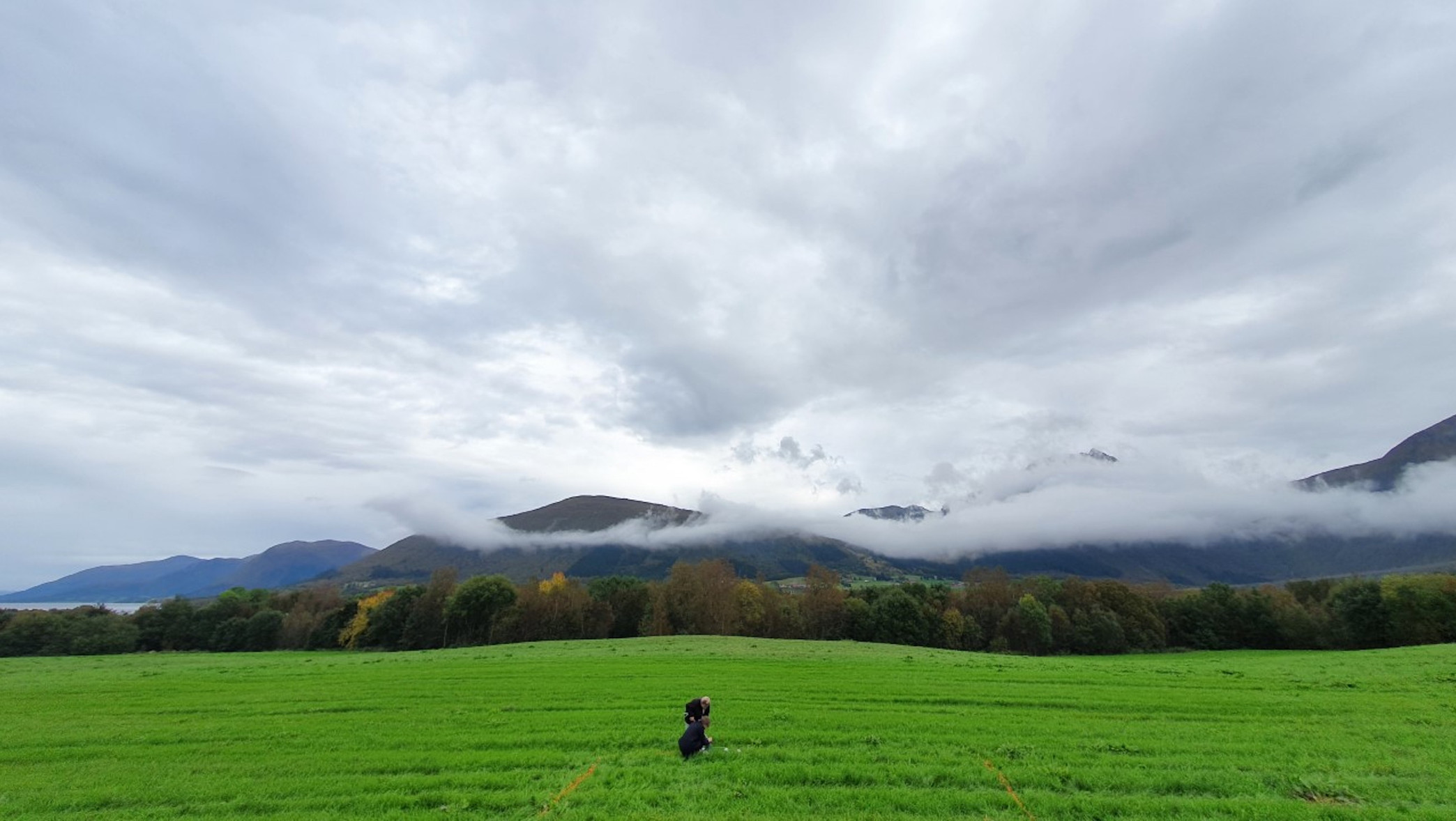
In 2021, artist Liv Dysthe Sønderland and actress Sara Wilhelmsen received a production grants from MRK for one of the projectweeks in Møre and Romsdal. Due to the situation with continued covid restrictions, presentation and artist talks were postponed until 2022.
You will not erase me is a project about the assimilation policy towards the nomadic group of people called Tater in Norway, often called travellers , the branch of the Romani people who have been resident in Norway and Sweden since 1500, and takes the form of a performance.
The floor plan of one of the houses at Svanviken working colony will be drawn on the site where the colony was located, (Eide in Møre og Romsdal). The action is repeated summer, autumn and winter in different weather conditions. The outline is wiped out again by rain.
The performances at Svanviken are filmed by the filmmaker Mateo R Christensen.
In the project “You will not erase me” the artists Liv Dysthe Sønderland and Sara Wilhelmsen, will use the floor plan of one of the family houses on Svanviken to focus on a degrading and failed policy, which took place so close to us geographically and close to us in time.
The floor plan is in many ways a symbol of the whole policy.
The four walls were to control and keep the Romani people in one place. The nomadic culture was to be abolished.
The idea of reforming through habitat goes back to 1870 and the first working colony projects as an attempt by the state/ society to “foster” and form certain groups to adapt to societies civil( bourgeois) accepted norms.
Wilhelmsen will draw the floor plan on Svanviken, where the houses actually where placed. A marking machine on wheels, of the type used to mark football pitches, will be used to draw the house. The chalk marking is a temporary pigment that is washed out after 2-3 rain showers. The fact that the image is washed away again gives associations to how the story and knowledge of what happened is erased over time.
The artist draws it up again and again as an attempt to hold the consciousness around the story, reminding us that this must not be forgotten. It is a symbolic act. By filming this in several seasons and in different types of weather, it is emphasized that time erases history, and it emphasizes an insistence that this must not be forgotten.
*The Norwegian and Swedish Romanisæl Travellers (Norwegian: romanifolket, tatere, sigøynere; Swedish: resande, zigenare, tattare; Scandoromani: romanisæl, romanoar, rom(m)ani, tavringer/ar, tattare) are a group or branch of the Romani people who have been resident in Norway and Sweden since 1500 ( 500 years ago)
Liv Dysthe Sønderland is a visual artist mainly working with drawing, printing, film and performance. In 2019, she received a request from Kunstmuseet Kube in Ålesund to create a work based on the Svanviken work colony for romani travelers, which was located on Eide in Møre og Romsdal. This was the beginning of her research on the history of the travelers. The work “Going Gray” was on display at the Art Museum in Ålesund until October 2021. While developing the project, Sønderland contacted several people with a Romani traveler background to anchor her understanding of the history among the people themselves. This is how she met Sara Wilhelmsen, and they then developed the collaborative art project when they were granted production support / Project Weeks 2021 from MRK. https://www.livdysthe.no/
Sara Wilhelmsen is from Molde. She is an actress and represents a young generation of Romani who have grown up with the aftermath of assimilation policies. She has always been interested in the history of her people. She did not understand why those around her would keep their romani identity hidden. As a 21-year-old, she wrote her own play based on her family, which also incorporated politics and greater society’s pressure on the ethnic group. It was performed at Riksscenen in Oslo, Glomdalsmuseet in Elverum and Innlandet Teater in Hamar. Wilhelmsen is one of the few exceptions in the Romani population who is open and expressing heself about her family background. She is brave, and she is a role model for other young people of Romani lineage, but also a role model for all young people who find it difficult to be open about identity.
Mateo R. Christensen (b. 1997) is a filmmaker and photographer. He grew up on Valderøya, Møre and Romsdal and has studied film at Danvik Folk High School and Einar Granum Art College in Oslo. Has worked with a number of artists and on various film productions. In 2021, he completed the short film «MAUR» which premiered at Amandus short film festival in Lillehammer and had a screening at the West Nordic International Short Film Festival in Ålesund in 2021